How Much Does It Cost to Live in a Caravan While Building a Home in New Zealand?
Living in a caravan while building a home can sound like a tidy, affordable in-between step. In practice, there are a few moving parts: finding the right caravan, getting it set up properly, making it liveable, and then managing the everyday reality of staying in it while the house build is underway.
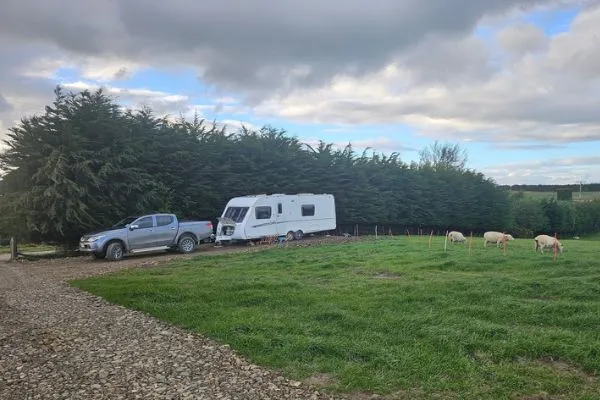
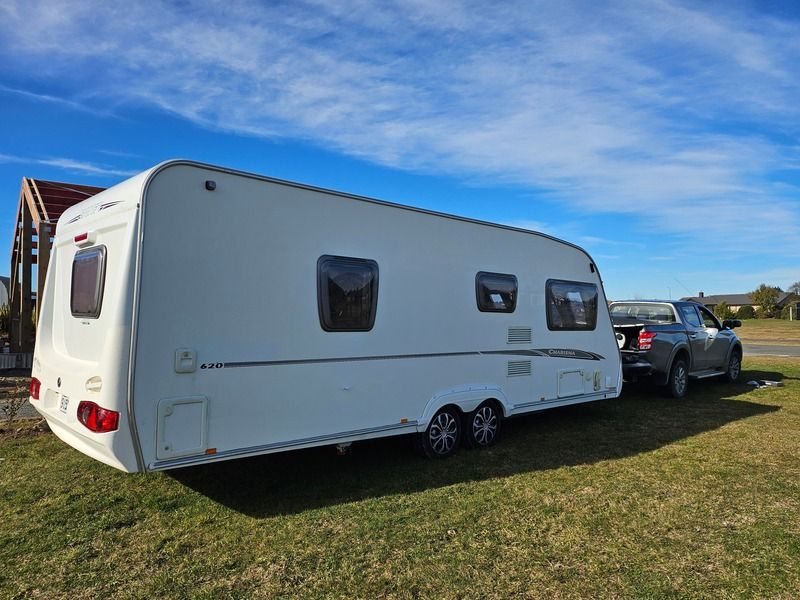
We are doing exactly that on our paddock in New Zealand, where our Swift Charisma caravan, named Trailer Swift, is now part of the process of turning the land into a mortgage-free home. If you are planning a build and wondering what caravan living might cost, our experience gives a real example of the numbers involved so far.
The short version is this: our caravan living setup has cost about $30,935 plus insurance so far. That total includes the caravan itself, the hard standing, and a few liveability improvements we made before moving in. It does not include insurance, so the actual ongoing cost is higher than that headline figure.
The caravan itself: what we paid
We found Trailer Swift on TradeMe. From there, the process moved in the usual practical steps: we viewed it in person, negotiated with the owners, and then bought it.
The caravan was advertised for $30,000, and we negotiated that down to $29,000. That was the biggest single cost in the whole setup, which is no surprise. If you are comparing caravan living with other temporary housing options, the purchase price is the part that can quickly define the budget.
Because this caravan is part of our longer-term plan, we were looking for something that could work for more than a very short stay. We wanted a proper liveable base while the house is being built, rather than something we would immediately feel the need to replace or upgrade.
The purchase itself also came with one of those small-but-real moments that anyone who has bought privately online will recognise. We transferred the money straight away and showed the sellers a screenshot of the transfer. At the time we were ready to leave, the money still had not arrived in the sellers’ account, so we also gave them our address and a copy of our passport. A few hours later, the sellers messaged to say the money had arrived.
That part did not affect the total spend, but it did remind us that buying privately can involve a bit of patience, especially when the payment has not yet shown up at the other end.
Getting the caravan ready to live in
Before moving the caravan permanently, we gave it a deep clean. That mattered more than it sounds like it might. A caravan can be perfectly usable and still benefit from a proper freshen-up before becoming your day-to-day home.
We also did a few simple upgrades to make it feel more comfortable and more suited to the way we wanted to live in it.
One of the easiest improvements was the soft furnishings. I took down every curtain, washed and ironed them all, and then made new cushion covers after learning from YouTube. That sort of work can make an older caravan feel much more cared for without needing a major renovation.
The materials for the cushion covers cost about $200. That is a useful figure if you are thinking about whether small cosmetic changes can be done on a modest budget. They can, as long as you are prepared to put in the time and do the labour yourself.
We also made a Japanese-style wooden bath mat for the shower. That cost around $35. It is a small item, but it shows how even one practical, handmade addition can make a caravan feel more finished and more personal.
These changes were not essential in the sense of being required to make the caravan usable, but they improved the day-to-day experience and helped us settle in more comfortably.
The hard standing: an important extra cost
One of the bigger practical costs after the caravan purchase was the hard standing. We had that installed for the caravan, and it cost $1,700.
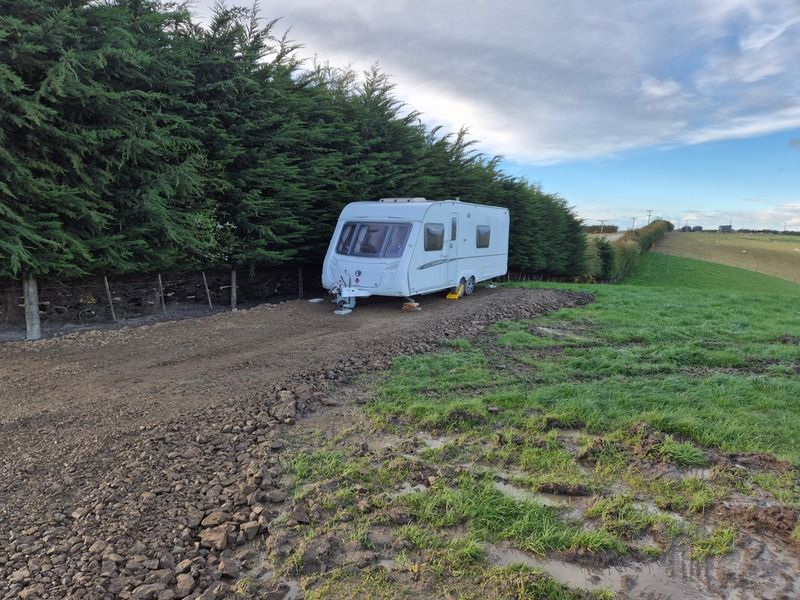
If you are comparing caravan living costs for a build site, this is the kind of expense that is easy to overlook at first. The caravan itself is only part of the setup. You also need to think about where it will sit, whether that area needs to be prepared, and how stable and practical the final position will be.
For us, the hard standing was part of making the caravan properly workable on the paddock. It is not the kind of cost that sounds exciting, but it is a real part of creating a liveable temporary home.
The dehumidifier Michael gave us
There was one useful piece of equipment that came with the caravan from the previous owner, Michael. He gave us a dehumidifier that had been used to keep moisture down and help dry towels in the bathroom.
Michael dropped the dehumidifier at the paddock before the caravan arrived, wrapped in thick plastic and tucked under the trees in the farm fence. We picked it up two days later.
That kind of practical handover can make life simpler when you are moving into a caravan while building. Moisture management matters, and a dehumidifier is the sort of thing that helps a small living space stay more comfortable.
Because it was given to us, it did not add to the amount we have spent so far, but it is still worth mentioning when thinking about the real cost of caravan living. Sometimes the useful extras are the items you do not have to buy yourself.
What our total has been so far
Here is the clearest breakdown of the main costs we have approved so far:
- Caravan advertised price: $30,000
- Caravan purchase price: $29,000
- Hard standing: $1,700
- Cushion cover materials: about $200
- Wooden bath mat: around $35
That brings the total spent so far to about $30,935 plus insurance.
That total is useful because it gives a real example for anyone budgeting for this kind of living arrangement in New Zealand. It shows that caravan living while building is not simply a matter of buying the caravan and parking it up. There are setup costs that need to be included if you want a realistic picture.
It also shows that small items add up. A few hundred dollars here, a few thousand there, and the overall number rises quickly. If you are planning a similar arrangement, it helps to think in terms of the full liveability setup, not just the purchase price.
What the total does and does not include
Our total so far is about $30,935 plus insurance. That means insurance is excluded from the total and should be treated as an additional ongoing cost.
The approved facts do not include other expenses, so we are not adding guesses for power, water, heating, maintenance, council matters, or any other running costs. Those may well exist in real life, but they are not part of the confirmed numbers here, so we are keeping this example strictly to what we know.
That approach matters if you are trying to compare options fairly. A caravan can look cheaper at first glance than renting or building a separate temporary dwelling, but the true cost depends on what you count, what you exclude, and what you still need to add later.
What we learned from setting up caravan living
The biggest lesson so far is that the cost of living in a caravan while building a home is made up of more than one layer.
First, there is the purchase price. In our case, the caravan cost $29,000 after negotiation.
Second, there are the practical setup costs that make the caravan fit for its new role. Our hard standing cost $1,700, which is a good example of the sort of site-related expense that can be easy to miss during early budgeting.
Third, there are the liveability improvements. We spent about $200 on cushion cover materials and around $35 on the wooden bath mat, and we also did the time-consuming work of deep cleaning, washing and ironing the curtains, and making the caravan feel more like home.
When you put those pieces together, caravan living becomes less about one big price and more about a collection of choices. Some are necessary, some are comfort-related, and some are simply part of making a small space work for everyday life.
Why this feels worthwhile for us
We are turning the paddock into a mortgage-free home in New Zealand, and the caravan is part of that broader plan.
That goal changes how we think about the money we spend now. The caravan is not just a stopgap; it is our home base while the build is underway. We are living in the space, looking after it, and making it work for us during this in-between stage.
The practical side matters, but so does the sense of progress. Having a liveable caravan on the paddock means we can stay close to the project and keep moving forward without needing to treat this time as wasted.
If you are considering something similar, it helps to be clear about what you want the caravan to do. In our case, it needed to be comfortable enough for daily life, practical enough for the build period, and solid enough to support our longer-term plans.

A realistic budget picture for caravan living in New Zealand
If you are trying to estimate what caravan living might cost while building a house, our numbers offer a grounded starting point.
A caravan advertised at $30,000 does not necessarily mean a $30,000 total project. After negotiation, we paid $29,000 for Trailer Swift, but once we added the hard standing and the smaller liveability costs, our total came to about $30,935 plus insurance.
That is still a controlled and understandable budget, but it is not a bare-bones number. It reflects a caravan that was bought, placed properly, and improved enough to live in comfortably.
The point is not that this exact figure will suit every build. The point is that caravan living has a real cost structure, and it pays to look at the whole picture early.
The bottom line
So, how much does it cost to live in a caravan while building a home in New Zealand?
In our case, the approved total so far is about $30,935 plus insurance.
That includes the caravan purchase, the hard standing, and the smaller improvements we made to make it liveable. It does not include insurance, and it does not include any unapproved extra costs.
For us, Trailer Swift has become a practical part of the build journey on our paddock, and the numbers show what it takes to make that work in a real New Zealand setting.
If you are planning your own homestead or building journey, we hope this gives you a useful sense of what caravan living can actually cost when you move beyond the idea and into the doing.
And if you would like to follow more of our homestead and building journey, The Homestead Letters is our monthly snail mail subscription, where readers can follow more of our homestead and building journey through a physical letter delivered to their mailbox.