She Had 130 Dogs and No Running Water
When people ask us about our travels, they usually want to hear about the places we visited.
They ask about the food in Thailand, the Christmas markets in Europe or what it was like driving through the UK. Those stories are certainly part of the journey, but they're not usually the ones I find myself thinking about years later.
The stories that stay with me are the unexpected ones.
The ones we never planned.
This is one of them.
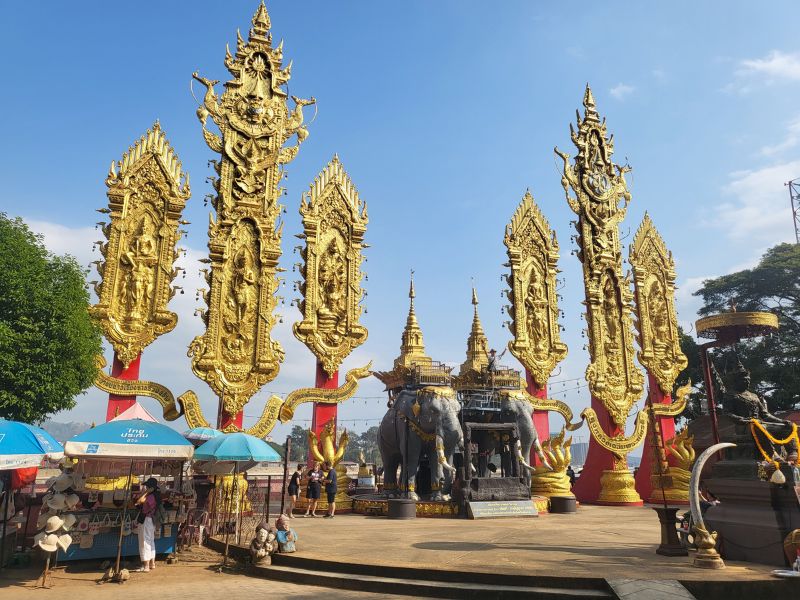
When Paul and I first arrived in Chiang Rai in northern Thailand, we expected to stay for a few months before moving on to another country. That had been our pattern throughout our travels. We'd spend a little while somewhere, get to know the place, then pack up and head off to the next adventure.
Thailand changed that.
We completely fell in love with the country.
What was supposed to be a short stay eventually turned into almost two years. We rented a beautiful four bedroom, four bathroom house and settled into a comfortable routine. Part of that routine was our wonderful Mae Baan. The closest English translation is "House Mother", and I think that describes the role far better than housekeeper ever could. She looked after the home, but she also looked after us. Before long she felt more like family than someone we'd hired.
One afternoon she walked in carrying her phone and asked if she could show us something.
It was a Facebook post written in Thai.
My Thai wasn't anywhere near good enough to read it, so she translated it for me.
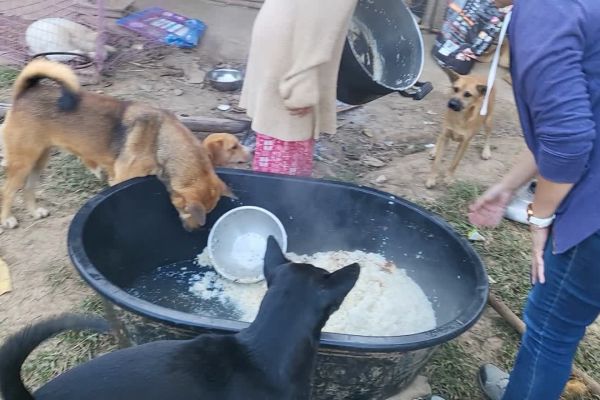
A woman living out in the countryside was caring for around 130 dogs and more than 20 cats. She wasn't asking for money. She wasn't asking for volunteers. She simply needed twenty kilograms of rice.
That was all.
Twenty kilograms of rice.
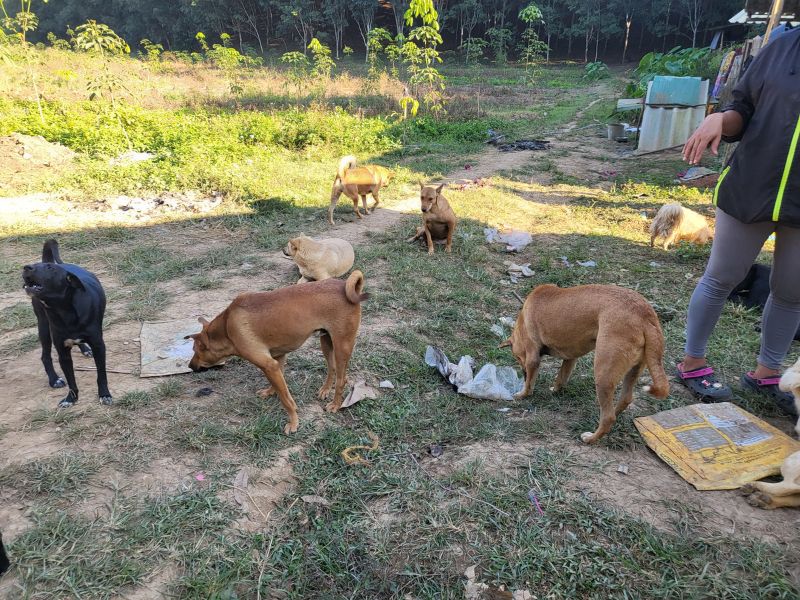
It seemed like such a simple request that we didn't think twice about it. We found somewhere selling rice in bulk, bought what she needed and loaded it into the car. I honestly thought we'd drive out there, drop it off, have a quick chat and head home again.
I couldn't have been more wrong.
More Than We Ever Expected
The drive took us well away from the city.
As the roads became smaller and the countryside opened up around us, I remember wondering how she'd ended up so far from everyone else.
When we finally arrived, it started to make sense.
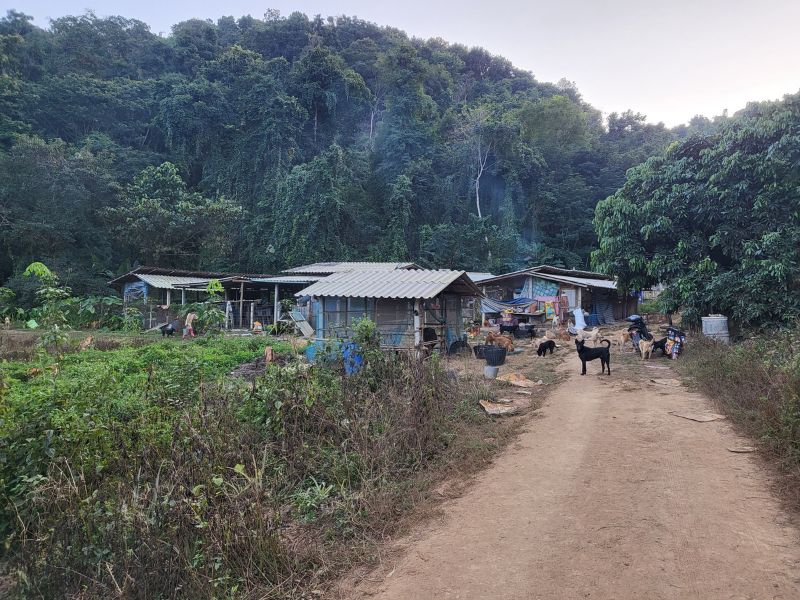
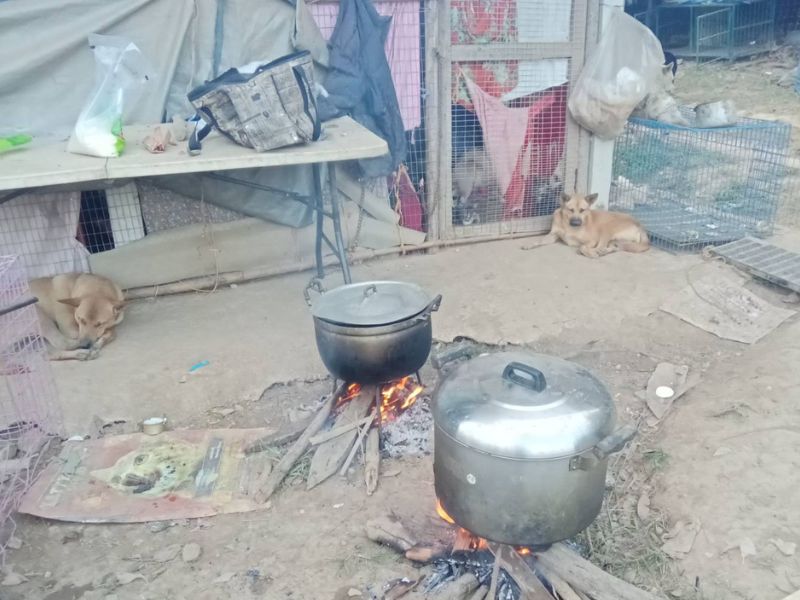
The rescue centre wasn't really a rescue centre in the way most of us picture one. There were no purpose built kennels or modern facilities. It was a collection of makeshift shelters and enclosures that had gradually grown over time as more animals arrived.
And they just kept arriving.
I'd read that she had around 130 dogs.
Reading those words on Facebook and standing in the middle of them are two completely different experiences.
Dogs were everywhere.
Some wandered around the property while others rested inside enclosures. Every time I looked in another direction there seemed to be another group of dogs I hadn't noticed before.
The cats were kept separately because the larger dogs would have hurt them. They had their own enclosure, and alongside them were some of the smaller, more vulnerable dogs that couldn't safely be housed with the bigger ones.
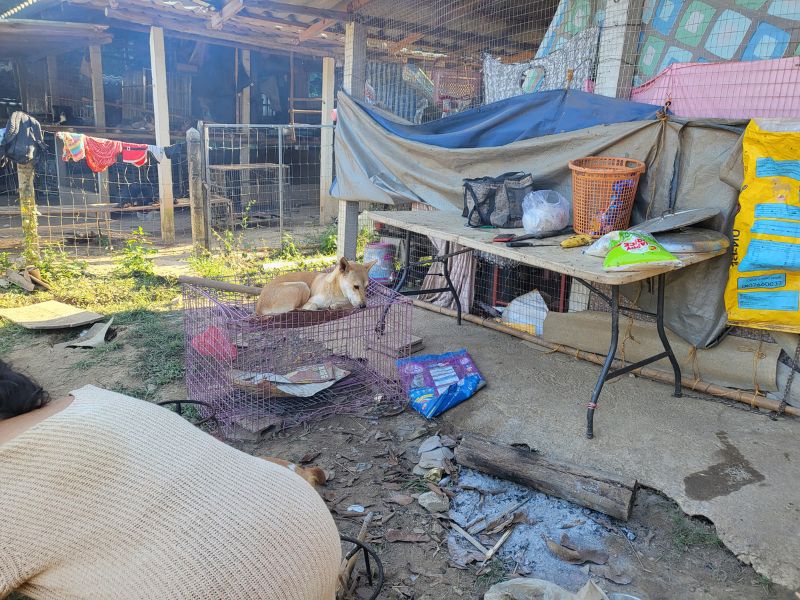
It quickly became obvious that every enclosure told its own story.
Some animals were old.
Some had injuries.
Some had clearly been abandoned.
Others had probably never known what it was like to belong to a family at all.
As our Mae Baan translated for us, we learnt that people constantly brought unwanted animals to this woman because they knew she would never turn them away.
That was both her greatest strength and her biggest challenge.
She simply couldn't say no.
A Woman Doing Everything She Could
The longer we spent walking around, the more we realised just how difficult her situation had become.
Inside the cat enclosure, some of the cats were sick.
There was a dead cat lying amongst the living cats.
Everything desperately needed cleaning.
With more than 150 animals depending on one person, it wasn't difficult to understand how things had reached this point.
Then she showed us where she lived.
She had no running water.
No electricity.
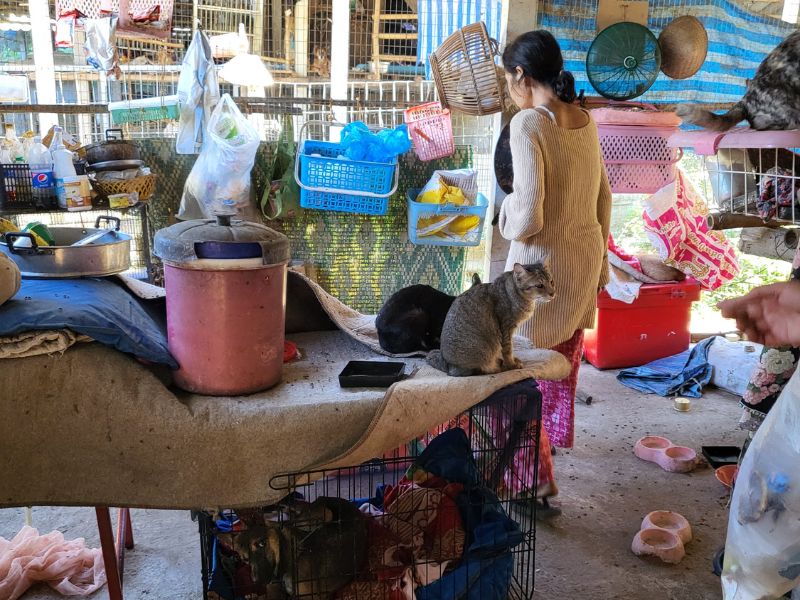
Her bed was in the cat enclosure, and that's where she slept every night.
Looking around, it would have been easy to make assumptions.
We didn't.
What we saw wasn't someone who didn't care.
We saw someone who cared so much that she'd given up almost everything else.
She'd dedicated her entire life to those animals.
Every dollar she had went towards feeding them or paying veterinary bills. Those vet bills had become so large she simply couldn't keep up anymore.
She wasn't ignoring the problem.
She was drowning in it.
I think that's an important distinction because it's easy to judge situations from a distance. Standing there in person gave us a completely different perspective.
She wasn't asking for sympathy.
She was asking for rice.
Sharing What We Knew
Both Paul and I had volunteered with the SPCA in New Zealand before we started travelling.
We certainly didn't have all the answers, but we knew enough to recognise some of the immediate problems.
One of the biggest concerns was the sick animals.
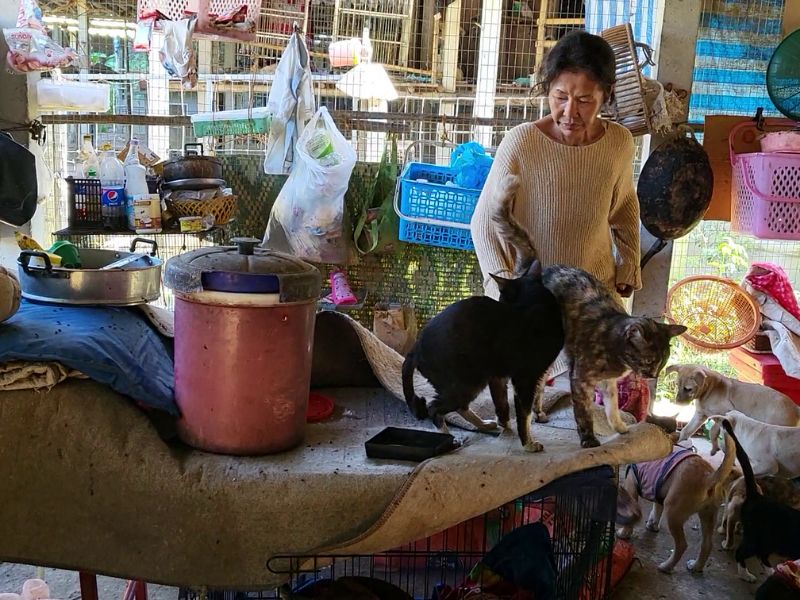
We spent time talking with her about separating sick animals from healthy ones wherever possible, along with cleaning routines that would help reduce the spread of disease throughout the rescue.
She listened carefully.
She asked questions.
She wanted to learn.
That surprised me.
I think I'd assumed she'd already know these things after caring for animals for so many years.
Instead, she told us nobody had ever shown her.
That conversation has stayed with me ever since.
Sometimes knowledge is every bit as valuable as money.
We Knew Food Wasn't The Answer
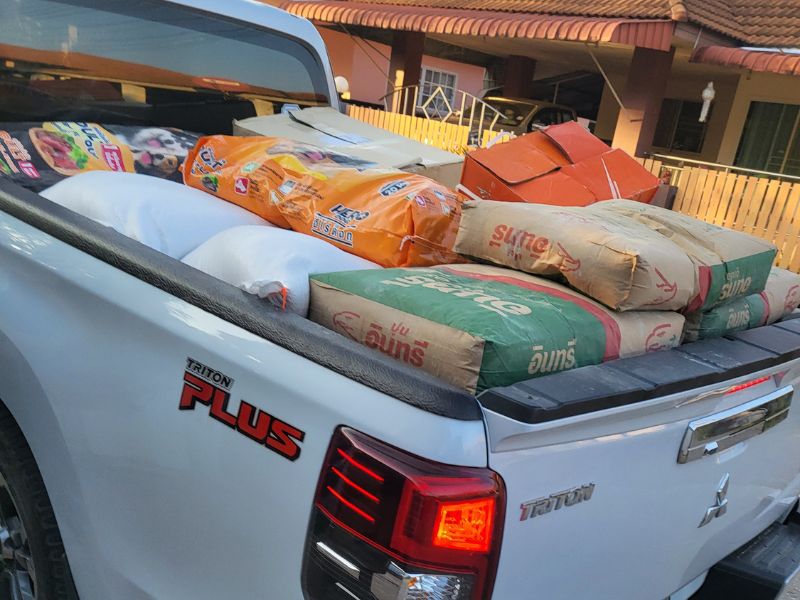
Over the following weeks we organised several much larger food deliveries.
Truckloads.
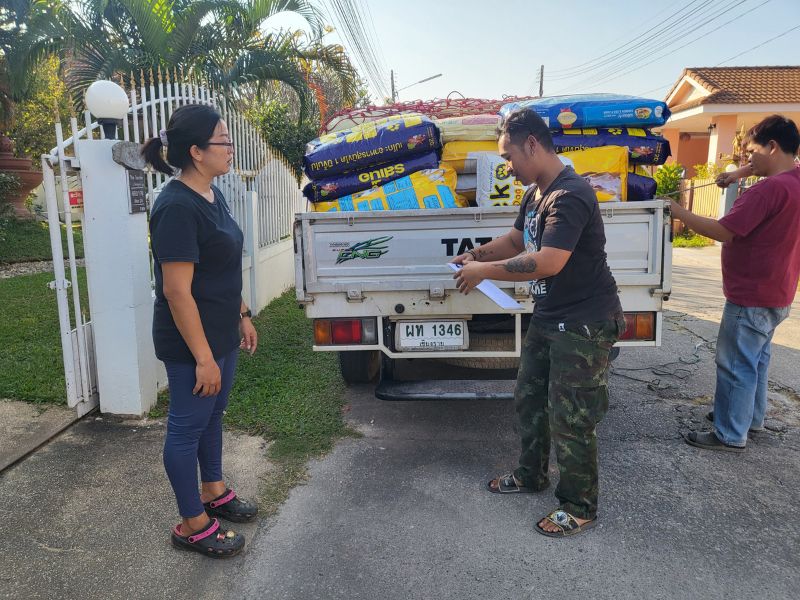
Watching those trucks arrive felt incredible because we knew it would take some pressure off her for a while.
But only for a while.
Paul and I talked about it a lot afterwards.
We were travellers.
Eventually we'd leave Thailand.
We could keep buying food until the day we boarded our flight, but then what?
The problem wouldn't disappear.
She'd still be there.
The animals would still be there.
She'd still need support.
That's when we realised the biggest difference we could make probably wasn't buying more food.
It was finding people who could keep helping long after we'd gone.
Finding The Right People
I started filming videos showing what life was really like at the rescue.
Not because I wanted people to feel sorry for her.
I simply wanted people to understand what she was trying to do and the challenges she faced every single day.
Paul contacted a Thai animal rescue organisation and shared the videos with them.
Thankfully, they agreed to come and see everything for themselves.
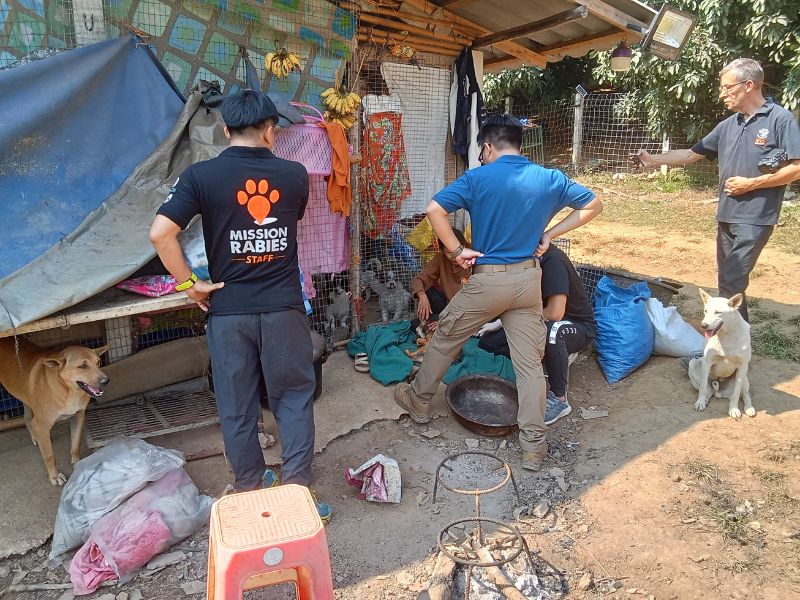
That was no small commitment.
The drive took around five hours each way, and the final part of the journey involved rough dirt roads, potholes and river crossings that could become genuinely dangerous after heavy rain.
It also explained why she'd become so isolated.
Helping someone is much harder when simply reaching them is difficult.
A Plan For The Future
The rescue organisation spent hours at the property.
They didn't rush through.
They walked around every enclosure, assessed the animals, spoke with the woman and worked through everything they believed needed to happen.
By the end of the day they had committed to helping.
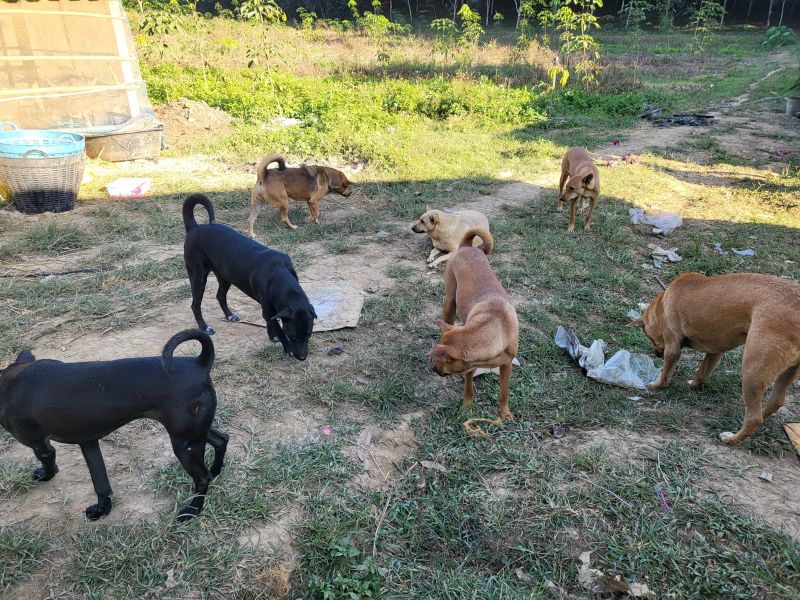
They would improve the access road by filling the potholes and making the river crossings safer.
They would install running water.
They would install electricity.
Every dog and cat would enter their neutering programme so the population could finally be brought under control.
I still remember how relieved we felt that day.
For the first time, it felt like there was a future beyond simply surviving from one donation to the next.
The Difference Between Helping And Solving
Looking back now, I don't really think about the rice.
Or the truckloads of food.
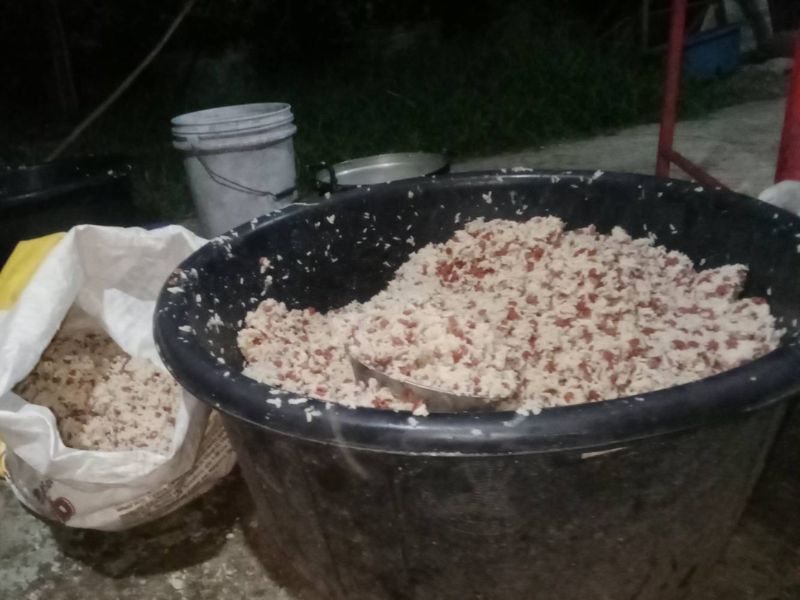
Those things mattered, and I'm glad we were able to help.
What stays with me most is the importance of connecting people.
The rescue organisation could do something we never could.
They could keep turning up.
They could build relationships.
They could provide ongoing support.
They could still be helping years after we'd continued our travels.
Knowing that made leaving Thailand much easier.
Those animals would have ongoing medical care.
They'd have running water.
Electricity.
Safer living conditions.
A proper neutering programme.
The woman who had devoted her life to caring for them would finally have people standing alongside her instead of trying to carry everything on her own.
Why I Still Tell This Story
During our travels we fed plenty of stray animals and donated wherever we could.
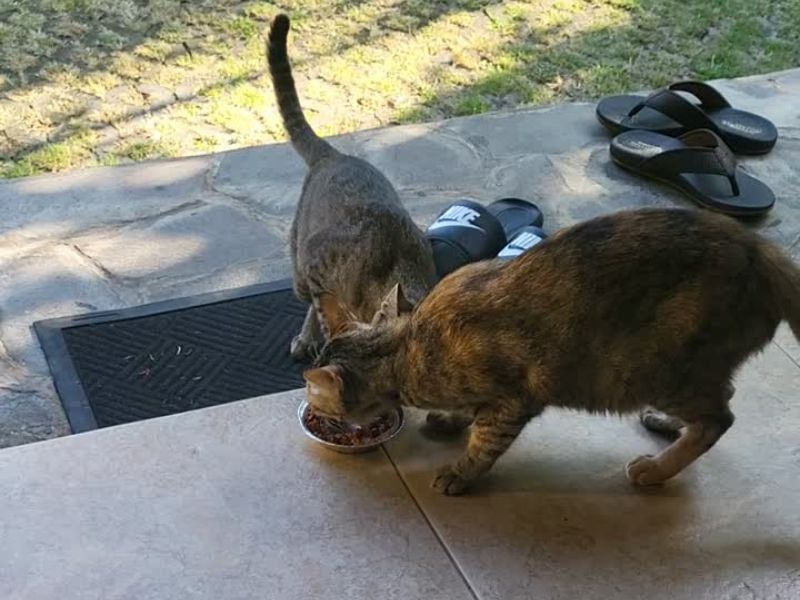
Thailand was different because we stayed there long enough for something lasting to happen.
Had we only spent a few weeks there, we probably would have dropped off the rice, wished her well and continued travelling.
Instead, we stayed.
We got to know people.
We understood the challenges.
We found organisations that could help.
That experience changed the outcome for around 150 animals.
It's also one of the reasons I enjoy writing The Homestead Letters so much.
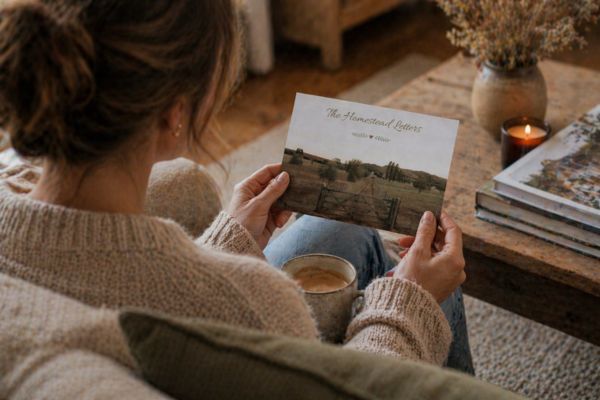
Every month I get to sit down and share the stories of our lives.
Sometimes I'm writing about building our mortgage free homestead here in New Zealand.
Sometimes it's about mistakes we've made along the way, lessons we've learnt or projects we're working on.
Sometimes it's stories like this.
The ones that shaped the way we see the world. And of course all the keepsakes that come with each letter: bookmarks, stickers, postcards and recipe cards of our favourite family recipes.
Two Little Cats
Thailand also became the place where we met Biscuit and Snowball.
Those two tiny rescue kittens eventually travelled with us through Europe and the UK before finally making the journey home to New Zealand.
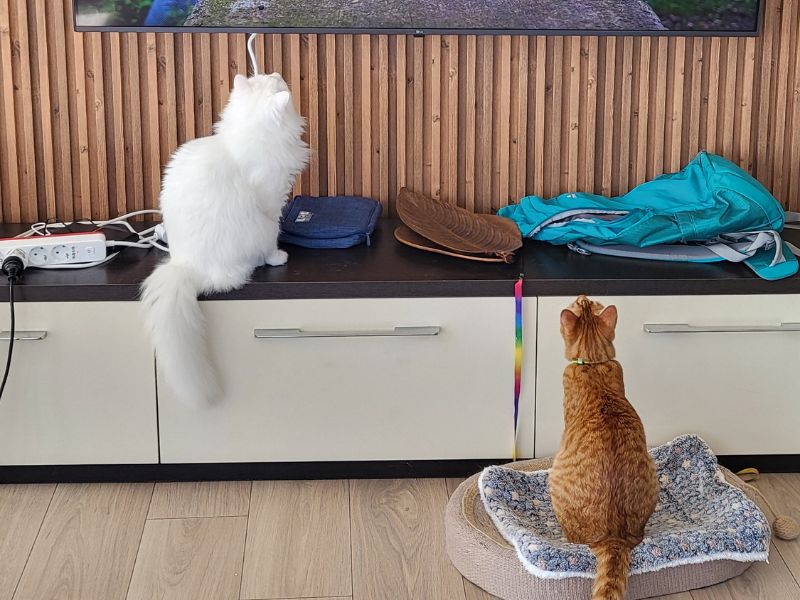
Today they spend their days in their catio in Otago, with wheatgrass growing on the windowsill and plenty of room to explore.
We're currently building our mortgage free home on our 2 hectares of rural land. You can read more about it in our blogs.
Every now and then I think back to that rescue centre.
Around 130 dogs. More than 20 cats.
One woman who refused to give up on them.
One Facebook post asking for twenty kilograms of rice.
It ended up becoming one of the most important experiences of our entire time overseas.
I've only shared part of the story here.
You can learn more of our lives and what we do in The Homestead Letters.
If you've been following our journey, from rescuing Biscuit and Snowball to building our mortgage free homestead in New Zealand, I'd love to have you join us. Each month I share the stories that don't make it onto social media, along with everything we're learning as we build this next chapter of our lives.